Saturday, October 10, 2015

How to Prepare Your Home for Winter

Winter puts heavy demands on homes, as well as on homeowners who want to keep their houses warm without soaring energy bills. Homeowners should winterize their homes in preparation for the cold months. Winterization takes place both inside and outside, and while there are many steps a homeowner can take, three stand out as the most crucial.

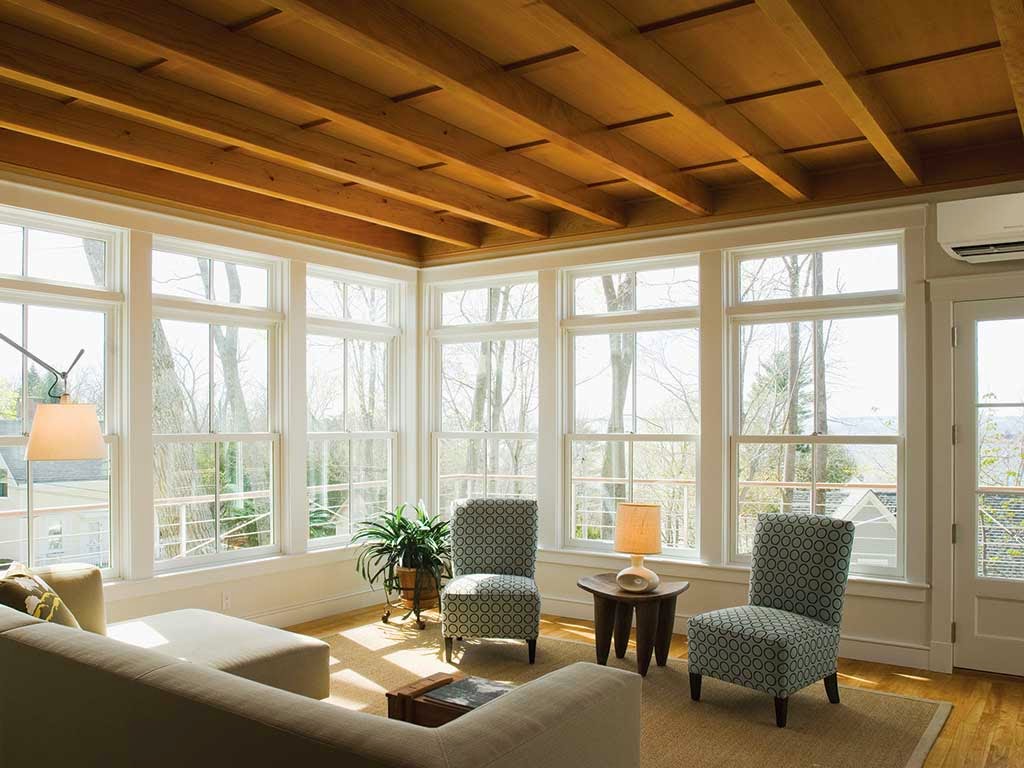
1. Install Insulated Windows

Insulated windows provide two benefits: they prevent heat from escaping outside, and they create a warmer window surface inside. This makes well-insulated windows far less drafty and prone to problems with condensation, which occurs when moist, warm inside air touches a cold surface. The best windows have a low U-factor (which measures level of insulation) and a high R-factor (which measures resistance to heat transfer).
It is important to consider these measurements for the entire window. The edges and frames of a window almost always transfer more heat, so some manufacturers list the "center window" rating of their windows, which can be misleading. The National Fenestration Rating Council (link is external) provides an energy rating that takes the entire window surface into consideration.

2. Use The Correct Insulation For The Right Part Of The Home

Homeowners can make their homes more comfortable while lowering their energy bills by using the right insulation for the right application in preparation for winter. But installing insulation is not the time to pinch pennies with a do-it-yourself project. When inexperienced homeowners attempt to take on the task themselves, they're likely make small mistakes that can result in gaps and leaks, which often go unnoticed.
There are many kinds of installation, but the most common are:
  • Batt-and-roll insulation, which is usually made of fiberglass and is fluffy to the touch (although it shouldn't be touched with bare hands). It is sold in large rolls and is ideal for filling spaces between wall studs, such as in attics.
  • Loose-fill insulation, which is designed for areas with no foot traffic, such as the spaces between floor and ceiling joists or crawl spaces.
  • Spray-foam insulation, which is sprayed on and expands to make an airtight seal. It is great for hard-to-reach spaces and awkward or small openings.

3. Winterize Water Lines and Air Conditioners

When water freezes and expands, it can create problems in many of the home's water-bearing systems, but the solution is fairly simple. Switch off your air conditioner's water shut-off valve, if it has one. Next, drain your air conditioner's hoses and pipes and make sure that no water has pooled inside the equipment. If you have window units, remove them for the winter and seal the window at the edges. Turn off spigots outside and make sure outside hoses are drained and stored.
Hiring professionals to install the right windows and insulation can go a long way to winterizing a home. But it's up to the homeowner to drain, shut off and store any systems that use water.
With a modest expense and minimal effort, a winterized home will pay dividends down the line.

- Mitsubishi Comfort

Tuesday, September 1, 2015

4 Reasons to Control Your Temperature Over Wi-Fi


4 Reasons to Control Your Temperature Over Wi-Fi
(Besides Being Really Cool)

Your home is your palace: but not if you’re shivering or sweating. Nothing can ruin a family board game night or an evening dinner party quite like temperature problems.

If you’re constantly up and down adjusting your thermostat, or if you’re in the living room wrapped in a blanket while your son is in his bedroom with the window open, it’s time to take back control: wirelessly.

RedLINK™ Wireless temperature control is the new way to keep yourself comfortable and focused on the important things rather than your thermostat.

4 Reasons Wi-Fi Control Rocks

    1. Space age technology: RedLINK™ wireless technology provides a back-lit American-style thermostat that’s both easy to use and easy to read. It’s programmable and can work with smartphones and computers. So if you’re on the couch writing an email or checking Facebook, you don’t have to get up if you want to adjust the temperature. The control is right at your fingertips.
    2. No unsightly wires: Isn’t that the whole point of wireless? No ugly wires, no difficult installation, no worry about corrosion or mice chewing on them. You can install the thermostat anywhere; its impressive range works through concrete and other floors of the house. So put it where you want it to be: no restrictions. Going wireless provides a new level of freedom and flexibility. You’ll wonder how you ever lived without it.
    3. You’re in control: Have you ever fought the "Temperature Wars" with your family members? Up, down, up, down: you’re back and forth from what you’d rather be doing, racing to the thermostat to adjust it to your comfort level – only to find an hour later that someone else has tampered with it. The wireless system gives you total home comfort: and you don’t have to get up when the house gets frigid (or feverish). Keep on cooking dinner, watching your favorite show or reading your book and simply adjust the temperature on your phone or computer.
    4. Peace of mind: Whether you’re out for the day at work or for a week on vacation, you can adjust the temperature from wherever you are. This enables you to turn down the cooling or heating while no one is home, which saves you money. But don’t come back to an ice box or the Sahara. Just readjust the temperature from anywhere and come home to an oasis.
Likewise, ductless technology works great at the cottage. Whether you won’t be back until spring or you’re heading there this weekend, while you’re away, you can have peace of mind that the temperature there is safe and cost-effective. You can check in anytime, see and adjust the temperature in your cottage – so no surprise frozen pipes or hefty heating bills.

There’s a reason everyone’s switching to wireless: from TVs to Internet connections to thermostats, wires are things of the past. They’re unattractive, take up needless space, are a headache to install – and they don’t provide the same 360 degree protection, coverage and convenience of wireless.

The temperature of your home should always be under your control. Whether you’re out for the day or the month, whether you want to check in, cool down or warm up, you should know what’s going on in your home and have the ability to adjust it – without any hassle. And that’s exactly the power RedLINK™ wireless technology places right in your hands.


Thursday, July 9, 2015

Minimize Cooling and Heating Costs

Right-size Your Cooling and Heating System by Calculating Efficiency

Half of the utility costs in the average American home go to cooling and heating, making climate control the single biggest expense in most U.S. homes. Calculating efficiency for a home's cooling (link is external) and heating (link is external) system is the key to conserving resources, lowering bills and making an investment that improves the home's overall cost and comfort.

Measuring the Efficiency of Heating Systems

  • Furnaces, which heat air that is then distributed around the home through a network of ducts, can operate with an efficiency of as little as 59 percent or as much as 98.5 percent, depending on the unit's age. Furnaces are expected to last between 15 and 30 years.
  • Boilers, which heat water to provide either steam or hot-water heat to radiators, pipes or coils, vary between 50 and 90 percent efficiency, depending on their age and the type of fuel they burn. Like furnaces, boilers last 15-30 years.
  • Electric heat is very efficient, between 95 and 100 percent. But space heaters and baseboard units come with drawbacks such as specific location requirements and difficulty with zone control.
  • Ductless heat pumps require more of an upfront investment, but they are the most efficient and provide the most precise zone control. They don't require invasive ductwork and they don't burn physical fuel. 

Calculating Efficiency for Different Types of Cooling Systems

Two-thirds of American homes have mechanical air conditioning. Homeowners spend $11 billion each year to run their air conditioners, which fall into three main categories. Here is how to measure the level of efficiency of each air conditioning system.
  • Window-mounted units are the most popular option. They're relatively cheap to purchase and run, but they're horribly inefficient. If a home has a window unit without correctly installed foam panels between the window frame and the air conditioner, it is almost certainly losing air through leakage — as much as 10 percent.
  • Central air can be cost effective, but only as long as the system's ductwork remains well maintained and doesn't run through unconditioned rooms such as garages. The outside compressor unit must be kept clear of leaves, snow and other debris to run at peak efficiency.
  • Split-ductless units come with a higher up-front cost, but don't lose any energy through ductwork. They retain their efficiency in every climate and are low maintenance.
Cooling and heating dominates the utility budgets of most homes. Each type system comes with pros and cons, but calculating efficiency is crucial to choosing the system that will provide the most comfort, the most control, the best use of resources and the greatest cost savings.

Takeaway

While the upfront cost of a whole-home or multi-room ductless system may be higher than some of the alternatives, the long-term savings will offset the cost over the lifetime of the system. Cooling and heating costs can be minimized by offseting furnaces and central air systems with a ductless solution, reducing monthly expenses by taking advantage of ductless' efficiency over traditional options.

Wednesday, May 27, 2015

Too Hot? Too Cold?


Too Hot? Too Cold? Stop Suffering and Finally Achieve Comfort With Home Zoning

What if an electrician came to your home and rewired your house so that all of the lights were turned off and on at the same time using a single switch? Most homeowners would show that electrician the door. However we still use that same impractical and inefficient concept for heating and cooling our homes. A single thermostat controls the temperature for the entire house, leaving some rooms hot, some rooms cold, and some rooms in a constant state of flux.


For decades, homeowners have accepted this one-thermostat-for-all-rooms solution. They’ve begrudgingly used space heaters and window air conditioners in order to try and even out temperatures in attics, basements, rec rooms, and bedrooms that never feel comfortable. However, there are plenty of options when it comes to controlling home comfort. Whether the problem is a single room or single area of the home, or you’re looking for a more cost-effective and energy-conscious solution for the entire house, there are options.

Controlled Comfort With Home Zoning

A zoned home is divided into segments, based upon each segment’s need for conditioning. Each zone is controlled by a thermostat, but instead of those thermostats connecting to a single unit, each zone has its own, individual split-conditioning system that keeps that zone the perfect temperature, without affecting other zones. This can improve energy efficiency and reduces heating and cooling costs across the board.
Zoning is very popular in new builds, but it is also possible for existing homes. Zoning is appropriate for all homes that:
  • Have two or more levels
  • Have rooms with large windows and/or vaulted ceilings
  • Make use of basements or attics as living space
  • Are built over concrete slabs
  • Experience extreme temperature swings or differentials
  • Are over 60 years old and cannot be torn up for ductwork
  • Experience family fights over the thermostat

Stop Treating Symptoms

In the past, homeowners have been forced to either accept hot spots and cold spots, or they have had to resort to expensive “band-aid” approaches like window AC units or space heaters to control the temperature in different areas of their home. These spot fixes can help control comfort, but they are expensive both to purchase and utilize, and they don’t solve the larger problem. It’s like taking aspirin when you have the flu – it can help treat the symptoms, but it doesn’t cure the virus.
Home zoning is an energy-efficient and cost-effective way to achieve the comfort that homeowners and their families deserve. Each zone is controlled by its own, individual thermostat that eliminates the need for supplemental systems and reduces energy bills. Once installed, zoned units are extremely quiet, causing no disruption in the everyday activities of life.

Single-unit cooling and heating is impractical and unnecessary. Homeowners have options that are completely customizable based upon individual needs and preferences. With home-zoning, families not only achieve comfort, but harmony in the home.